
By Dana Syme, Director of Client Experience, Incipio Workforce Solutions
Employer branding is one of those things that used to feel like a “nice to have.” You’d polish your careers page, maybe share a post or two on social media, and call it a day. That is not how it works anymore. Today, employer branding directly affects hiring, retention, employee engagement, and even customer experience.
The shift is clear: candidates are behaving more like consumers than job applicants. Before they ever click “apply,” they are researching your company, checking social media, reading reviews, and trying to figure out if your culture aligns with their expectations. If your brand isn’t clear or authentic, they’ll move on without a second thought.
While hospitality shows this connection most obviously, employees are your brand in action every day and this applies everywhere. Wherever your people deliver your product or service, how they feel about their work affects business outcomes. Employer branding is no longer optional. It is a business-critical strategy.
Employer Branding Is Business Critical, Not Optional
The talent market has changed dramatically in the last few years. Candidates want clarity. They want to know what it’s like to actually work for you. Studies show more than 80 percent of candidates research companies online before deciding whether to apply.
That means if you don’t have content showing your culture, values, and expectations, you’re invisible to top talent. They won’t wait for you to catch up. You might notice fewer applications, or applications from candidates who aren’t the right fit, without ever realizing your employer brand is the cause.
In hospitality, this is especially important. High turnover or poor employee engagement translates almost immediately into inconsistent guest experiences. Service quality depends heavily on the human connection between your staff and your customers. You can’t separate employee experience from customer experience, they are one and the same.
The companies that understand this prioritize employer branding because they know it is tied to real business outcomes: stronger teams, happier customers, and more consistent revenue.
Employer Branding Isn’t Just Marketing
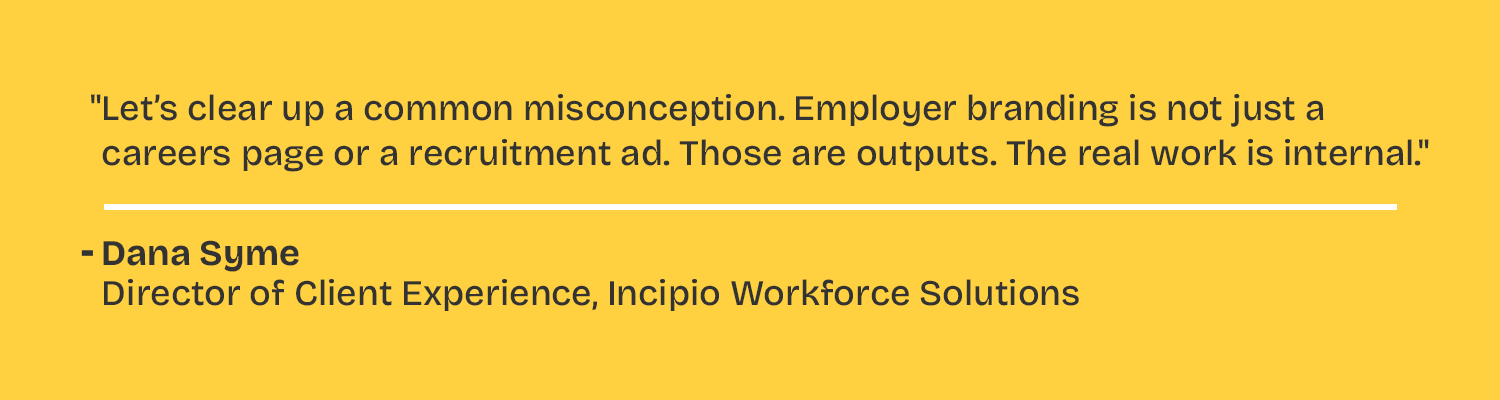
Let’s clear up a common misconception. Employer branding is not just a careers page or a recruitment ad. Those are outputs. The real work is internal.
At its core, employer branding is why employees choose to work for you instead of your competitor. That starts with a clear Employee Value Proposition, a real, lived experience that employees can point to. Then, external messaging simply communicates what is already happening internally.
This is where culture and leadership matter most. If you claim to value your employees but day-to-day actions say otherwise, candidates and employees will notice. Employer branding is about authenticity. It’s about aligning what you say externally with what happens internally.
Hospitality Makes It Visible
Hospitality makes employer branding easy to see. Your employees are the front line. If they feel supported and valued, customers see it. If they don’t, customers see that too.
Some of the best examples come from companies that make employees a priority. When employees are empowered and celebrated, it shows in how they treat customers. That’s why companies like Trader Joe’s are consistently cited as having both excellent employee and customer experiences, their model starts with people first.
A negative employer brand, on the other hand, is like a leak in a pipe. You might not notice it immediately, but over time it affects retention, customer experience, and brand reputation.
The Ripple Effect: From Talent to Customer Loyalty
A strong employer brand doesn’t just attract talent. It retains talent, improves engagement, and strengthens customer experience.
When employees feel respected, supported, and understood, loyalty follows. And loyalty isn’t always about pay. Clear expectations, growth opportunities, and stability often matter more than you think. Employees who feel invested in your mission embody your brand in ways that customers notice immediately.
Poor employer branding comes with measurable costs. High turnover increases hiring and onboarding expenses, sure, but it also affects productivity, erodes institutional knowledge, and demands management time that could be spent on strategic priorities.
At Incipio, we see this pattern a lot. Clients come to us with retention problems or hiring challenges. As we dig in, it’s almost always connected to unclear employee experience and misaligned leadership behaviors. When we help improve internal systems and culture, the employer brand naturally strengthens and attracts better candidates without relying on slick marketing alone.
What Today’s Candidates Really Want
Compensation and benefits are important, but they are no longer enough. Candidates want flexibility, growth, purpose, and wellbeing.
Flexibility does not always mean remote work. In most operational roles, remote work isn’t an option. Flexibility means that employees have their lives acknowledged. Can they switch shifts easily? Are time-off requests straightforward? Is there cross-training so coverage is possible? These are simple operational realities that communicate respect for employees as whole people.
Candidates also want to see growth opportunities and a clear connection to purpose. They want their work to matter and to feel supported in achieving their own goals.
One of the most frequent mistakes companies make is using internal job descriptions as external ads. A job description sets internal expectations. A job ad needs to speak to someone who knows nothing about your company. Candidates make a decision in seconds. If the ad doesn’t connect with what they care about, they move on immediately.
Leadership Drives Employer Brand
No campaign will overcome poor leadership behavior. Executives and managers shape employer branding through decisions, communication, and actions.
When leaders ask for feedback but fail to act on it, employees notice. That inaction undermines credibility quickly. Employer branding cannot exist in a vacuum. It must reflect operational reality.
One of the most common leadership mistakes is treating employer branding as a communications exercise rather than an operational commitment. Strong employer brands start with consistent behaviors, clear expectations, and transparency from leadership. External messaging is a reflection of internal reality, not a replacement for it.
Aligning culture internally and externally is not optional. Employees notice inconsistencies immediately. Candidates notice too. Authenticity is non-negotiable.
How We Help Build Employer Brands That Work
Most organizations don’t come to us explicitly asking for employer branding support. They come for retention solutions, hiring strategies, or operational efficiency. That is where the opportunity lies.
Our approach at Incipio starts by understanding the employee experience. Are managers supported? Are systems in place to help employees succeed? Are expectations clear? When the internal work is solid, the employer brand strengthens naturally.
Authenticity is reinforced by employees themselves. Real employee stories, candid testimonials, and realistic job previews are far more effective than polished marketing. Candidates want honesty more than perfection. They want to see what it’s really like to work there.
When we translate internal reality into external messaging, it resonates with candidates and reduces misalignment, attrition, and mismatched hires.
Looking Ahead: Employer Branding Trends
The future of employer branding will be defined by transparency, flexibility, and human centered leadership.
Organizations that make work accessible and adaptable to real life needs will stand out. Purpose, belonging, and wellbeing will continue to drive candidate decisions. Employees want to feel respected, recognized, and connected to the mission.
Transparency will separate the winners from the rest. Candidates are becoming better at spotting inauthentic messaging. Brands that communicate honestly about culture, expectations, and opportunities will attract the right talent.
The companies that invest in making work genuinely supportive will win. The ones that focus solely on messaging will fall behind.
A Practical Call to Action
If leaders need to rethink one thing, it is this: employer branding is a leadership responsibility, not just HR.
Companies spend enormous amounts of money marketing to customers while overlooking the experience of employees. Every customer interaction is delivered by a person. Employee experience matters. Every decision, policy, and process affects your employer brand.
Start simple. Review your careers page, social profiles, and online reviews through the eyes of someone who has never heard of your company. Would that person feel compelled to apply? Would they feel like the culture aligns with their values?
Employer branding starts with awareness, continues through action, and is sustained by leadership behavior. Slogans, polished visuals, and campaigns are secondary. The foundation is consistent, authentic treatment of employees.
When employees feel valued, candidates notice. Customers notice. Business outcomes improve. Strong employer brands are not built overnight or through a campaign. They are earned through daily leadership decisions that create real experiences worth sharing.
The companies that succeed will be the ones that care about their people first and communicate that authenticity clearly. That is how employer branding drives real business impact.