
The senior living industry has spent years focused on staffing.
Open positions need to be filled. Schedules need to be covered. Communities need enough people in place to support residents and maintain operations. These priorities are critical, but they have also caused many communities to spend more time reacting to workforce challenges than planning for long-term success.
Rather than prioritizing hiring more people, the most successful senior living communities are investing in workforce strategies that strengthen retention and support long-term business performance.
HR Plays a Key Role in Operational Strategy
Why workforce planning has become one of the biggest drivers of business performance in senior living.
For years, HR was viewed primarily as a support function focused on applicant recruiting, onboarding, compliance, and employee administration. While those responsibilities remain important, workforce planning has evolved into something much larger.
Today, workforce decisions influence nearly every aspect of a senior living community. They affect resident experience, employee engagement, and financial performance.
Workforce instability often creates hidden costs that extend beyond recruiting expenses. Frequent turnover can increase onboarding demands, disrupt team continuity, create documentation inconsistencies, and place additional pressure on employees who remain. Over time, these challenges can reduce operational efficiency and make it more difficult for leaders to focus on proactive workforce planning.
As a result, workforce planning has become a key driver of organizational success. Strong business performance starts with workforce alignment across leadership, teams, and strategic priorities.
The Staffing Crisis Is No Longer Temporary
The New Reality Senior Living Leaders Are Facing
Many senior living leaders initially viewed workforce shortages as a temporary challenge. The expectation was that the labor market would eventually stabilize, hiring would become easier, and staffing levels would return to normal.
That has not happened.
Workforce challenges have evolved from a short-term disruption into a long-term reality. Competition for talent remains strong, employee expectations continue to evolve, and burnout continues to affect both frontline team members and leaders.
At the same time, senior living managers are expected to deliver exceptional resident experiences while balancing ongoing staffing pressures, turnover, and increasing operational demands. For many communities, the challenge is no longer simply filling open positions. It is building a stable, engaged, and capable workforce that supports both resident and business goals over the long term.
The Hidden Cost of Workforce Instability
The Business Cost of Reactive Workforce Management
Most senior living communities can easily identify the direct costs of recruiting and onboarding new employees. The most difficult costs to quantify are the day-to-day operational disruptions and cultural impacts that come with workforce instability.
When turnover increases, productivity often suffers. Leaders spend more time interviewing, hiring, and training, while team members are asked to cover additional responsibilities. Over time, that extra workload can lead to stress, fatigue, and burnout.
The effects go beyond staffing numbers. Persistent turnover can weaken engagement, strain teamwork, create communication challenges, and make it more difficult to deliver consistent performance.
The financial implications are significant, but the operational impact may be even greater. Leaders who spend their days reacting to workforce issues have less time to focus on growth, innovation, and strategic priorities.
Understanding the true cost of turnover often reveals that workforce instability extends well beyond recruiting expenses. It influences every part of the organization, from employee morale to resident satisfaction and long-term business performance.
Why Reactive Hiring Keeps Organizations Stuck
The Risks of Hiring Without Long-Term Planning
Hiring is an important part of workforce management, but it is not a workforce strategy.
One of the most common mistakes senior living leaders make is treating every workforce challenge as a recruiting problem. While hiring can help fill immediate vacancies, it doesn’t always address the underlying issues that lead to turnover, burnout, or staffing instability.
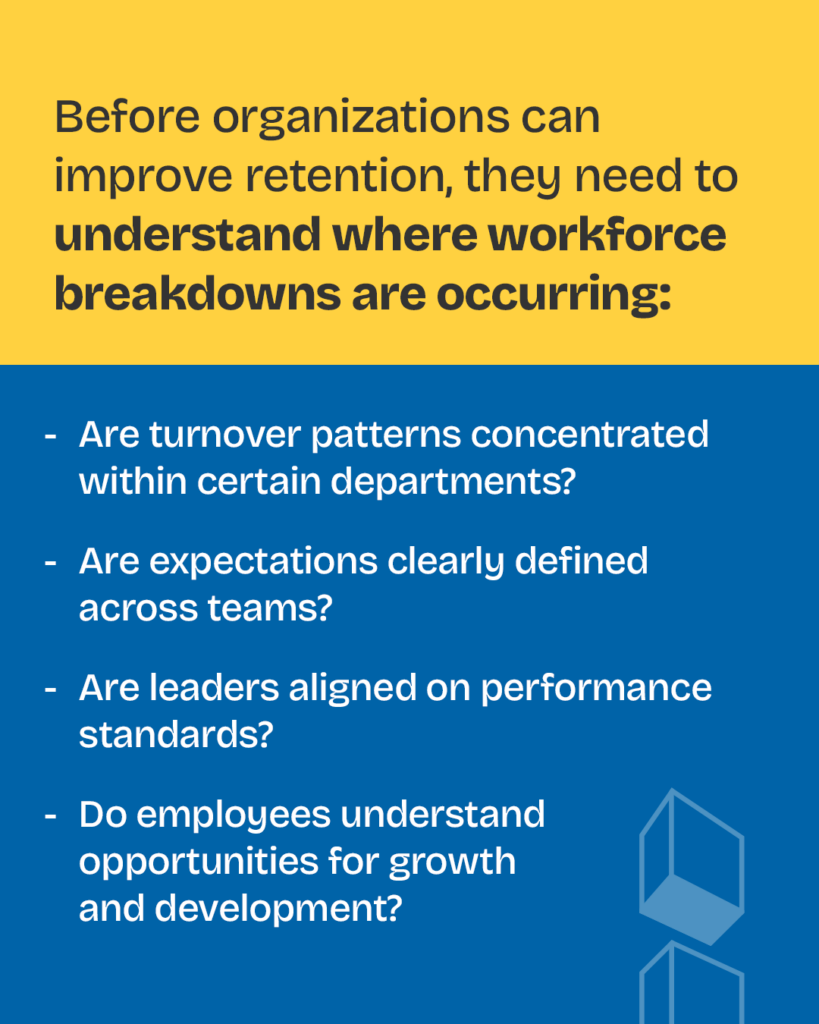
To improve retention and build a more stable workforce, leaders first need to understand where breakdowns occur and what causes them. Key areas to examine include:
- Are turnover patterns concentrated within certain departments?
- Are expectations clearly defined across teams?
- Are leaders aligned on performance standards?
- Do employees understand opportunities for growth and development?
Successful businesses take the time to assess their workforce environment, identify areas of misalignment, and develop an improvement plan. This is where strategic HR services and workforce planning become valuable. Rather than reacting to workforce challenges as they arise, leaders begin addressing the underlying factors that contribute to them.
What happens when senior living leaders move from reacting to workforce challenges to building a long-term strategy? The results can be substantial.
In partnership with Incipio Workforce Solutions, Masonic Homes Kentucky saw a 500% increase in applicant flow, a 200% increase in completed interviews, and a 300% increase in accepted offers.
Explore the Senior Living Case Study to learn how a strategic workforce approach strengthened recruiting results and supported long-term workforce goals.

What a 12-Month Workforce Strategy Actually Looks Like
Building a Workforce Plan Beyond Immediate Hiring Needs
Leaders need insight into turnover trends and workforce gaps. Before workforce challenges can be addressed, there must be a clear understanding of where those issues are occurring and why. From there, the focus can shift to alignment.
Leaders work to establish consistent expectations across departments, define critical roles, and ensure workforce decisions support broader organizational goals. Strong workforce alignment creates consistency and helps teams move toward the same vision of success.
As these efforts take hold, organizations are better positioned to build a stable workforce and create a foundation for future growth.
The challenge for many senior living leaders is knowing where to begin. Building a long-term workforce strategy can feel overwhelming when teams are already managing day-to-day staffing demands.
If this sounds familiar, we created a guide to help you take the next step.
The 12-Month Workforce Strategy Map provides senior living leaders with a practical framework for assessing workforce challenges, improving alignment, strengthening retention, and preparing for future growth.
Ready to strengthen workforce alignment and long-term stability? Contact Incipio Workforce Solutions to learn how workforce alignment can create a stronger foundation for growth.